Mega Millions vs Powerball: Which US Lottery is Better for International Players?
For international lottery enthusiasts, the allure of the massive, life-changing jackpots offered by American lotteries is undeniable. Two names consistently dominate the headlines: Mega Millions and Powerball. These colossal games, with their record-breaking prizes, are accessible to players worldwide through various licensed international lottery platforms and betting sites. But when it comes to choosing between them, which US lottery presents a better opportunity for the international player? The answer isn’t as simple as picking the biggest jackpot. It requires a deep dive into the game mechanics, odds, prize structures, and the practicalities of playing from abroad.
Understanding the Giants: Game Formats and Odds
At first glance, Mega Millions and Powerball appear remarkably similar. Both require players to select a set of main numbers and an additional bonus ball. However, the subtle differences in their matrices are crucial. Mega Millions utilizes a 5/70 matrix for the main numbers and a separate Mega Ball from a pool of 25. Powerball, on the other hand, uses a 5/69 matrix for the white balls and a Powerball from a pool of 26. This slight variation significantly impacts the odds. The overall odds of winning the Mega Millions jackpot are approximately 1 in 302.6 million, while Powerball’s odds are about 1 in 292.2 million. While Powerball offers marginally better odds for the top prize, both games present astronomically long odds, making them effectively similar in terms of jackpot difficulty. The real distinction often lies in the frequency of rollovers and the subsequent jackpot growth, which can be influenced by these foundational odds.
Prize Tiers and Secondary Wins
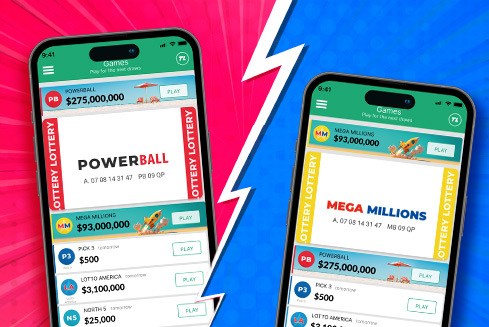
While the jackpot captures global imagination, savvy international players know that a lottery’s value is also measured by its lower-tier prizes. Both games offer nine prize tiers, but the distribution and amounts can differ. For instance, matching five main numbers without the Mega Ball or Powerball yields a significant second prize, often amounting to millions, which is pari-mutuel and depends on the number of winners and ticket sales. A key strategic consideration is the presence of features like the Power Play and Megaplier. These are optional add-ons that multiply non-jackpot winnings, typically for an extra cost per play. The Power Play multiplier, drawn each Wednesday and Saturday night, can be 2x, 3x, 4x, 5x, or even 10x when the jackpot is below a certain threshold. The Megaplier, drawn every Tuesday and Friday night, offers multipliers of 2x, 3x, 4x, or 5x. For international players using third-party services, the availability and handling of these add-ons should be verified with the specific provider, as they can dramatically enhance the value of smaller wins.
Frequency of Massive Jackpots
Both games are engineered to produce eye-watering jackpots. Looking at historical data, such as a recent Mega Millions draw that soared to an estimated $505 million, and Powerball’s frequent offerings of similarly colossal sums, it’s clear that both are capable of generating the world-record prizes that attract global ticket sales. The cycle often sees one game’s jackpot climbing to extreme heights while the other resets, creating a near-constant opportunity for players to engage with a giant prize. There is no consistent evidence that one game consistently offers larger jackpots than the other over a long period; they tend to trade the record back and forth. For the international player, this means monitoring both games and deciding when to engage based on the current jackpot size and personal preference, rather than a fixed belief that one game is inherently “bigger.”
Accessibility for International Participants
This is perhaps the most critical practical factor. Residents of the United States can purchase tickets directly from authorized retailers. For players located in Europe, Asia, Africa, or elsewhere, direct purchase is not possible. Instead, they must utilize the services of legitimate, licensed international lottery betting websites and platforms. Companies like Lottoland, Jackpot.com, and TheLotter have built substantial reputations by allowing customers worldwide to bet on the outcomes of these US draws. It is paramount that international players conduct thorough due diligence. They must ensure the platform they choose is licensed and regulated by a recognized authority, such as the Malta Gaming Authority or the UK Gambling Commission, and clearly explains how winnings, especially large jackpots, are collected and paid out. The experience of claiming a multi-million dollar prize through a third-party service differs significantly from holding the physical ticket, so understanding the provider’s terms of service is a non-negotiable first step.
Strategic Considerations for Global Players
Given the near-identical odds and prize potential, strategy for international players shifts from game selection to smart participation. One approach is to follow the jackpot cycle. Some players prefer to enter only when the jackpot has rolled over several times, justifying the investment with the larger potential return, even though the odds remain unchanged. Another consideration is pool play. Many international platforms facilitate or even encourage forming syndicates. By pooling resources with other players, you can afford to purchase more lines or entries into multiple draws, thereby increasing your overall chances of winning a prize, though any winnings are shared. Furthermore, understanding tax implications is vital. While non-US residents are generally exempt from US federal tax on lottery winnings, the country of residence may tax the income. Consulting with a tax professional familiar with international lottery winnings is a highly recommended actionable tip before any significant play.
The Verdict on Value and Experience
Declaring one game definitively “better” is impossible, as the better choice often depends on the individual player’s goals and the current circumstances. If marginally better jackpot odds are the absolute priority, then Powerball has a slight mathematical edge. If a player is attracted to the potential of the 10x Power Play multiplier for non-jackpot prizes, that might sway them toward Powerball during certain jackpot cycles. Conversely, if a player prefers the specific matrix of Mega Millions or is simply following a particularly large jackpot run, like the recent $505 million draw, then Mega Millions becomes the compelling choice. For most international players, the decision will likely come down to which jackpot is larger at the moment they wish to play, or even which game’s draw schedule aligns better with their time zone, as Mega Millions draws are held on Tuesdays and Fridays, and Powerball on Wednesdays and Saturdays.
Playing Responsibly Across Borders
The global accessibility of these lotteries must be paired with global responsibility. The excitement of participating in a massive US jackpot draw from thousands of miles away should never overshadow the fundamental principle that lotteries are a form of entertainment, not a financial strategy. Players should only wager money they can afford to lose entirely. It is crucial to set a strict budget for lottery play and adhere to it religiously, regardless of jackpot size or promotional offers from international platforms. Recognizing the signs of problematic gambling, such as chasing losses or spending more than intended, is essential. Reputable international lottery providers offer robust tools for deposit limits, self-exclusion, and access to support organizations like GamCare or Gamblers Anonymous. Remember, the dream of a jackpot is thrilling, but it should never come at the cost of personal or financial well-being.

Written by